If you’ve been looking for the best Bluetooth headphones, you’ve probably noticed that almost every model promises great sound, long battery life, and powerful noise cancellation. However, specifications alone do not tell you which pair will actually suit your music, travel, work, calls, or budget. In this guide, we’ll compare the leading options and explain exactly what to look for before you buy.
What Are Bluetooth Headphones and How Do They Work?
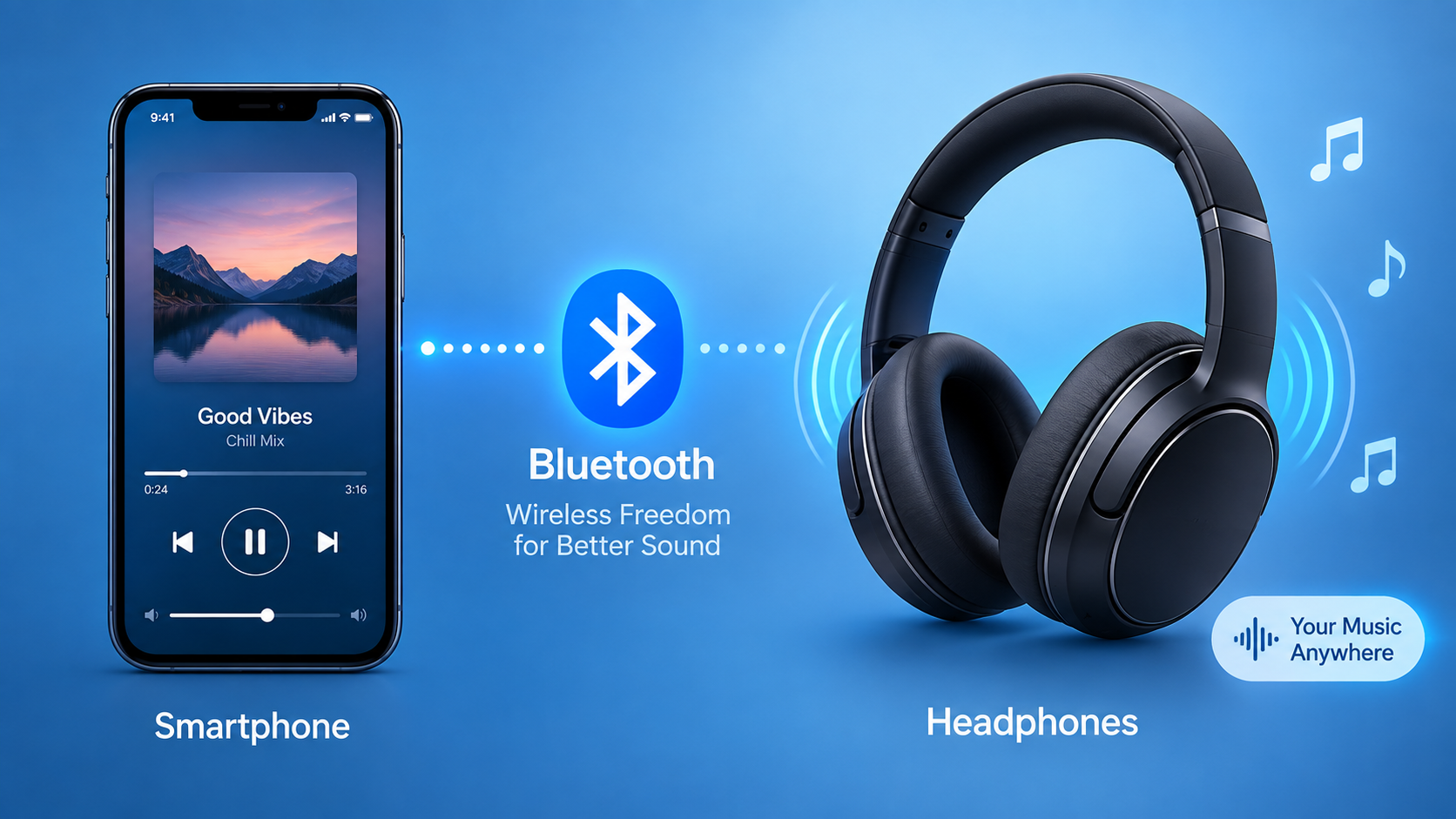
Bluetooth headphones are wireless headphones that use Bluetooth technology to transmit audio from a compatible device without requiring a physical audio cable. The headphones contain Bluetooth hardware that communicates with a phone, laptop, tablet, television, or another supported source.
First, your source device converts the audio into digital data and sends it wirelessly to the headphones. The headphones then decode that information and use their drivers to convert the signal into sound.
For example, when you connect headphones to your smartphone and play Spotify, the phone sends the audio wirelessly rather than through a 3.5mm headphone cable.
Bluetooth itself is a wireless communication technology rather than a guarantee of sound quality. The Bluetooth version, audio codec, headphone hardware, software, and source device all influence the final experience.
Bluetooth SIG currently maintains multiple Bluetooth Core specifications, including 5.2, 5.3, 5.4 and newer generations, while LE Audio builds on Bluetooth Low Energy and introduces technologies such as the LC3 codec and Auracast broadcast audio.
What Is the Difference Between Bluetooth Headphones and Wireless Earbuds?
Bluetooth headphones usually refers to larger over-ear or on-ear wireless headphones, while wireless earbuds are smaller in-ear products. Both can use Bluetooth, but their designs target different priorities.
For example, over-ear headphones can provide larger ear cushions, stronger passive isolation, larger drivers, and more space for batteries and microphones. Wireless earbuds are easier to carry and often better suited to exercise or highly portable listening.
What Are Over-Ear, On-Ear, and True Wireless Headphones?
Over-ear headphones surround your ears, on-ear headphones rest directly against them, and true wireless earbuds sit inside the ear canal without a connecting cable.
For example, a frequent traveler may prefer over-ear headphones because they can combine strong ANC, comfort, and long battery life. Someone who wants a small pocket-friendly option may prefer true wireless earbuds instead.
| Type | Main Strength | Best For | Main Trade-Off |
|---|---|---|---|
| Over-ear | Comfort and immersion | Travel, music, office | Larger size |
| On-ear | Compact design | Casual listening | Less isolation |
| True wireless earbuds | Portability | Exercise, commuting | Smaller battery |
| Open-ear earbuds | Awareness | Outdoor use | Less isolation |
Why Are the Best Bluetooth Headphones Important?
The best Bluetooth headphones matter because the right model can improve sound quality, comfort, concentration, calls, travel, and everyday convenience. A poor choice can leave you with uncomfortable earcups, weak microphones, short battery life, or disappointing noise cancellation.
First, consider how many hours you expect to wear the headphones. A pair that sounds excellent for 30 minutes may not be comfortable enough for an eight-hour workday.
For example, the Sennheiser Momentum 4 Wireless offers up to 60 hours of Bluetooth playback with ANC under the manufacturer’s test conditions, making battery endurance one of its strongest selling points.
Second, consider your environment. A frequent flyer needs different features from someone who mainly listens at home.
For example, a commuter may prioritize ANC and transparency mode, while a remote worker may care more about microphone quality and multipoint connectivity.
Third, consider the ecosystem you already use. Apple users may value Apple-specific integration, while Android and Windows users may benefit from headphones with broader platform support.
What Are the Best Bluetooth Headphones in 2026?
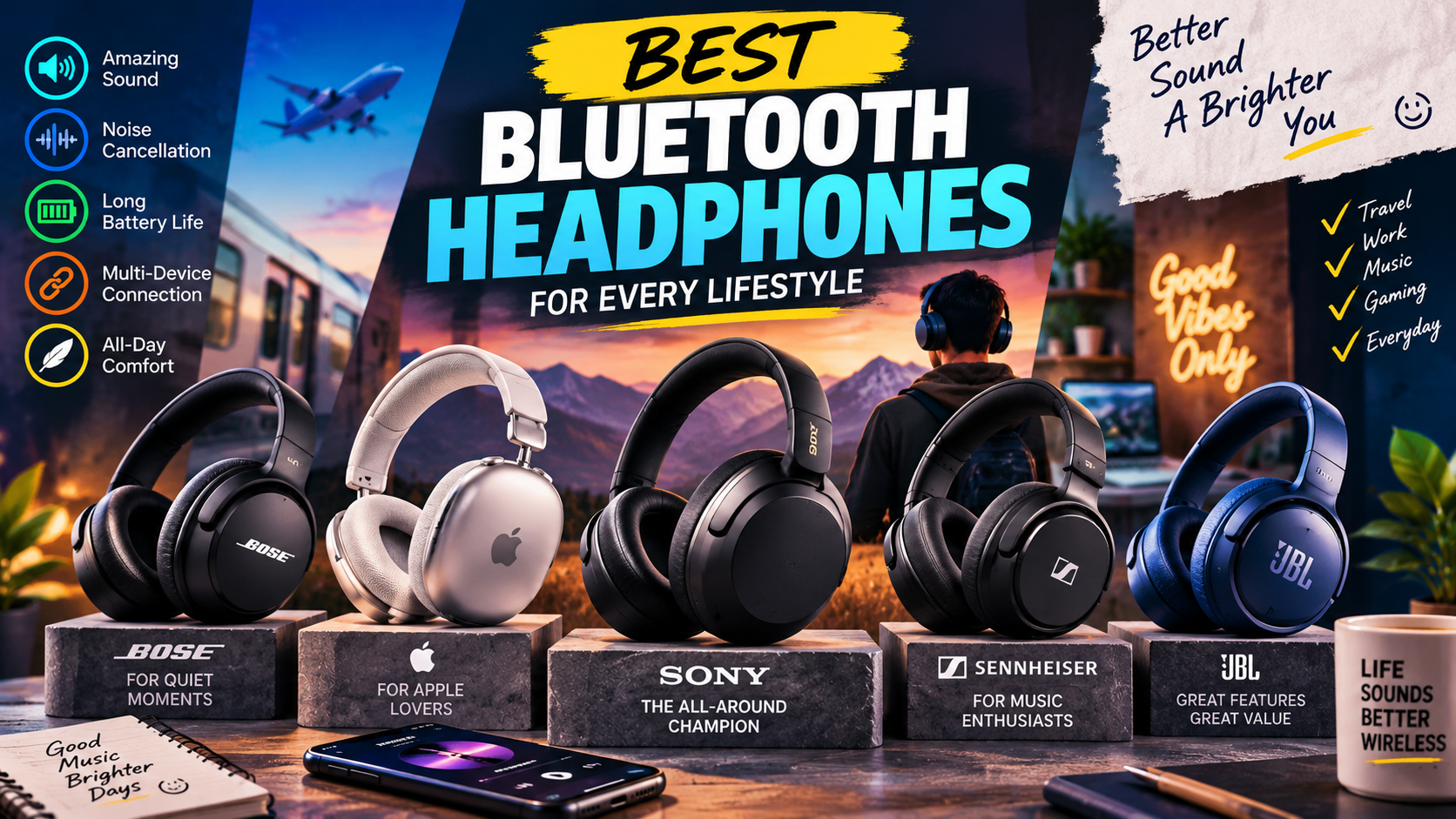
The best Bluetooth headphones in 2026 depend on the buyer’s use case, but the Sony WH-1000XM6, Bose QuietComfort Ultra Headphones (2nd Gen), Sennheiser Momentum 4 Wireless, Apple AirPods Max 2, and JBL Tune 770NC are strong options across different categories.
Rather than choosing a single universal winner, the following table organizes the recommendations around what each model does particularly well.
| Headphones | Best For | Battery Claim | ANC | Key Advantage |
|---|---|---|---|---|
| Sony WH-1000XM6 | Best overall | Long-lasting | Yes | Balanced flagship feature set |
| Bose QC Ultra 2nd Gen | Noise cancellation & comfort | Up to 30 hours | Yes | Excellent ANC and comfort |
| Sennheiser Momentum 4 | Battery & music | Up to 60 hours | Yes | Battery life and sound |
| AirPods Max 2 | Apple users | Up to 20 hours | Yes | Apple ecosystem integration |
| JBL Tune 770NC | Budget/value | Up to 70 hours | Yes | Low price and long battery |
| Soundcore Space Q45 | Affordable ANC | Up to 50 hours with ANC | Yes | Features for the price |
Battery figures are manufacturer-rated and can vary according to volume, ANC, codec, calls, and other settings.
What Are the Best Bluetooth Headphones Overall?
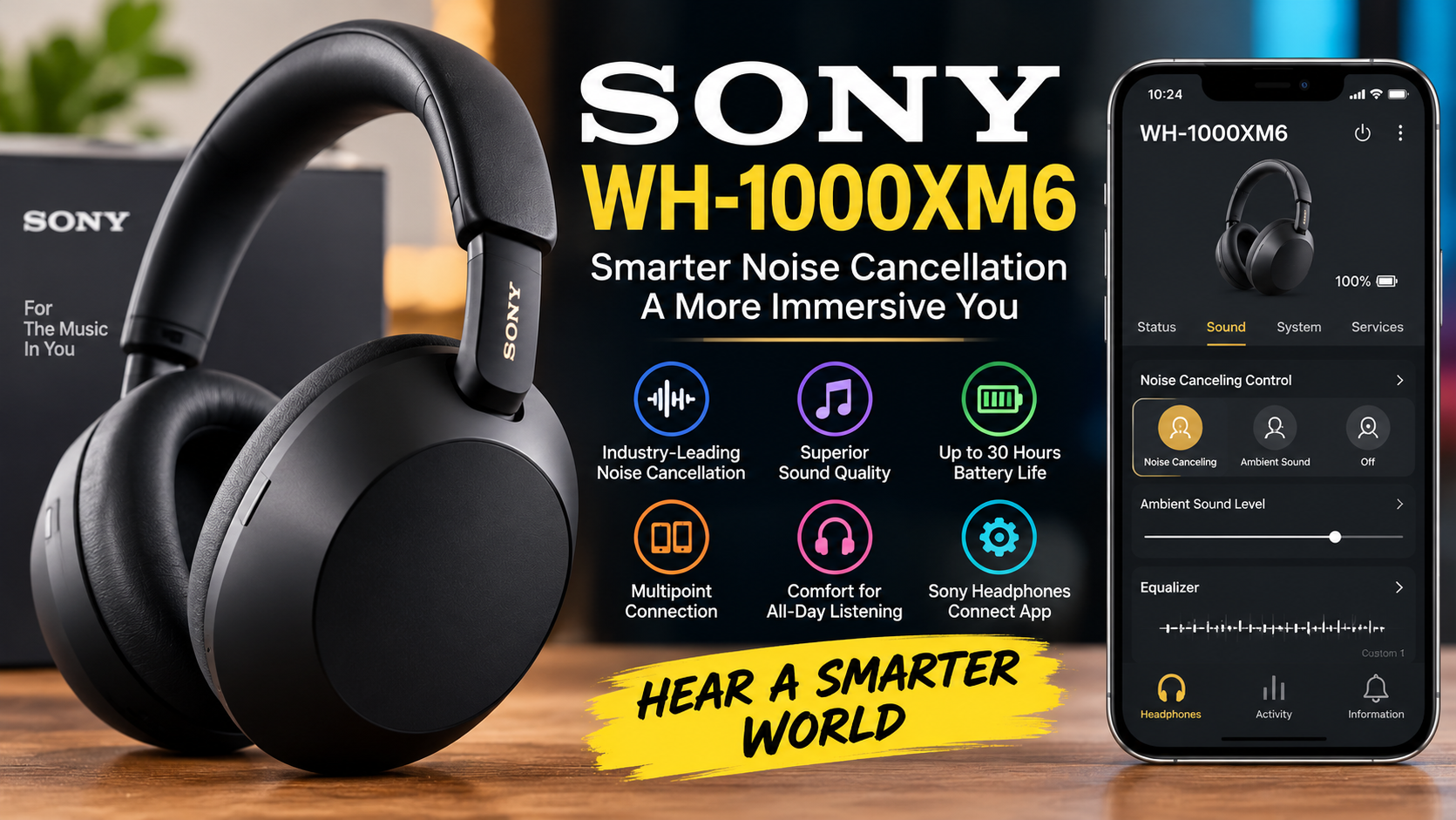
The Sony WH-1000XM6 is one of the strongest all-around choices for buyers who want premium noise cancellation, good sound, useful connectivity, and broad device compatibility.
First, independent testing places the WH-1000XM6 among the leading premium wireless headphones and highlights its combination of noise cancellation, comfort, battery performance, and broad app support.
For example, RTINGS’ comparison of the WH-1000XM6 and AirPods Max 2 describes Sony as the easier all-around recommendation for most people, particularly because of comfort, battery life, case design, and cross-platform app support.
Choose the Sony WH-1000XM6 if you want one premium pair that can handle music, travel, work, and everyday listening.
Which Bluetooth Headphones Are Best for Noise Cancellation?
The Bose QuietComfort Ultra Headphones (2nd Gen) are a strong choice for buyers who prioritize noise cancellation and long-wearing comfort.
Bose lists adjustable ANC, active noise cancellation, echo reduction, Bluetooth 5.4, and up to 30 hours of battery life for the second-generation model.
For example, Bose rates the headphones at up to 30 hours with Immersive Audio off and up to 23 hours with Immersive Audio on, demonstrating why advertised battery life should always be read alongside feature settings.
Independent testing also finds the Bose QC Ultra 2nd Gen competitive with other flagship ANC headphones, while noting differences in sound, microphone performance, and battery life.
Choose Bose if blocking external noise and maintaining comfort for long sessions are your top priorities.
Which Bluetooth Headphones Are Best for Music and Battery Life?
The Sennheiser Momentum 4 Wireless is a compelling choice for listeners who prioritize sound quality, customization, comfort, and long battery life.
Sennheiser rates the Momentum 4 at up to 60 hours of playback with ANC enabled under its stated test conditions. The headphones also support SBC, AAC, aptX, and aptX Adaptive codecs.
For example, a user who travels frequently can potentially go several days between charges, although actual runtime depends on volume, calls, codec, temperature, and other usage conditions.
Choose the Momentum 4 if battery endurance and music-focused listening matter more than having the newest flagship design.
Which Bluetooth Headphones Are Best for Apple Users?
The Apple AirPods Max 2 is designed for buyers who already use Apple devices and want premium over-ear headphones with deep ecosystem integration.
Independent testing describes the AirPods Max 2 as a premium ANC option but notes its shorter battery life and Apple-centric feature set compared with some competitors.
For example, Apple users who already rely heavily on Apple devices may value ecosystem features more than a longer battery rating.
RTINGS’ 2026 comparison found the Bose QC Ultra 2nd Gen more versatile overall, while the AirPods Max 2 remains a strong option for users who prioritize Apple’s ecosystem.
Choose AirPods Max 2 when seamless Apple-device integration is more important to you than maximum battery endurance or cross-platform flexibility.
Which Bluetooth Headphones Are Best on a Budget?
The JBL Tune 770NC is a strong budget-oriented option for buyers who want ANC, multipoint connectivity, and long battery life without moving into premium pricing.
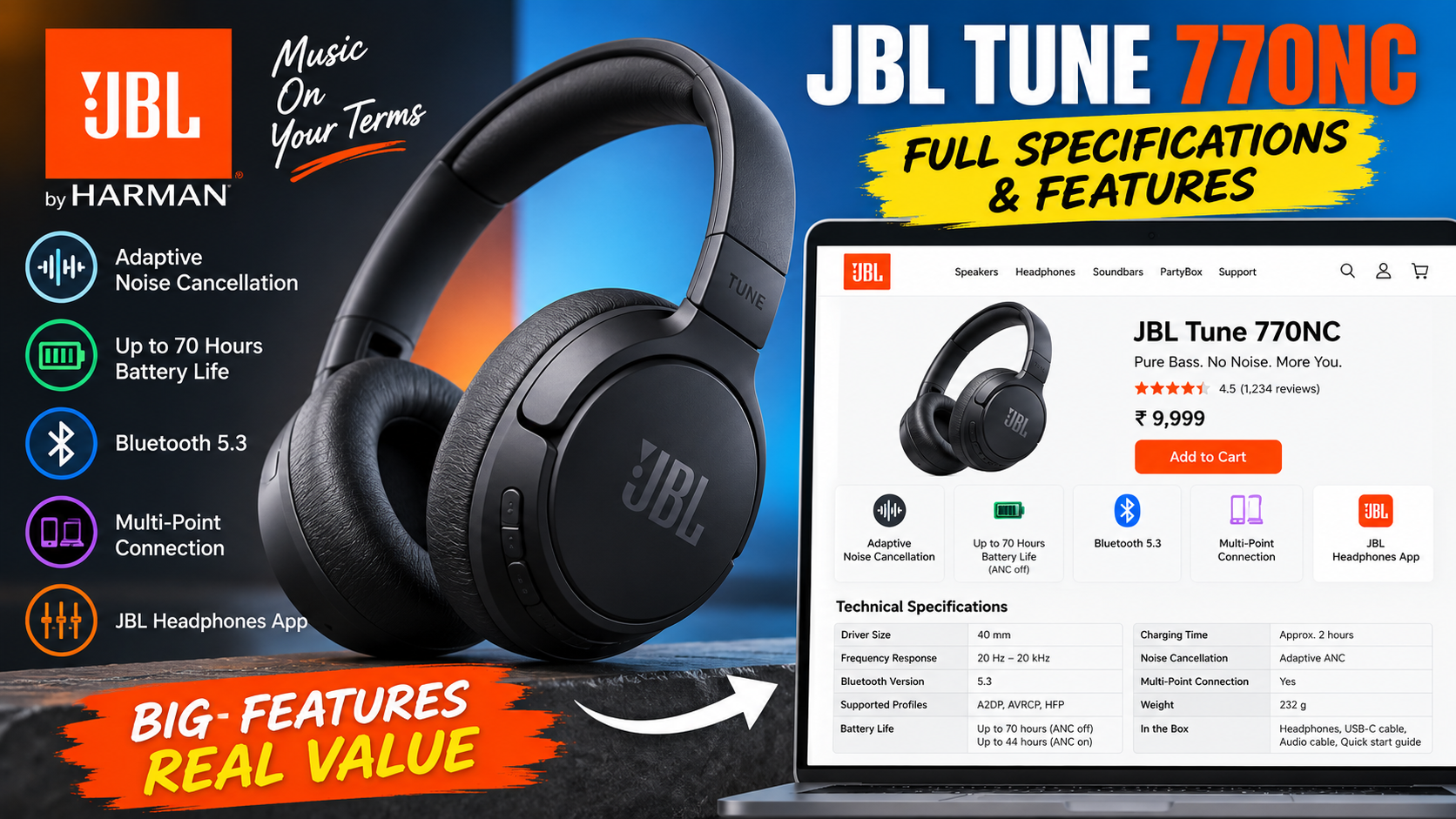
JBL’s current specifications list Bluetooth 5.3, adaptive noise cancellation, multipoint connection, and up to 70 hours of battery life with ANC off or up to 44 hours with ANC enabled.
For example, JBL’s India store currently lists the Tune 770NC below ₹6,000 on some variants, although retail prices can change with promotions and availability.
Choose the JBL Tune 770NC if you want useful everyday features without paying flagship prices.
Is the Soundcore Space Q45 a Good Affordable ANC Alternative?
The Soundcore Space Q45 is an affordable ANC headphone option that combines multipoint connectivity, LDAC support, and long battery life.
Soundcore states that the Space Q45 can provide up to 65 hours without ANC and up to 50 hours with ANC at its stated test volume, while supporting AAC, SBC, and LDAC codecs.
Independent testing has also highlighted the Q45’s ANC, microphone performance, comfort, multipoint connectivity, and value-oriented pricing.
Choose the Space Q45 if you want a feature-rich ANC headset at a lower price than flagship models.
What Features Should You Look for in Bluetooth Headphones?
The most important Bluetooth headphone features are sound quality, comfort, ANC, battery life, microphone quality, connectivity, codec support, durability, and software features. No single specification determines whether headphones are good.
First, start with the features that directly affect your daily use rather than chasing the highest specification number.
How Important Is Sound Quality?
Sound quality describes how accurately and enjoyably headphones reproduce music, speech, movies, and other audio. It depends on the drivers, tuning, digital processing, fit, source quality, and codec rather than one specification.
For example, two headphones can both advertise a wide frequency response but sound completely different because their drivers and tuning are different.
Frequency response numbers alone cannot tell you which headphones will sound better to your ears.
If music is your main priority, look for a well-tuned headphone with a companion EQ, strong passive isolation, and codec support that matches your phone or computer.
Is Active Noise Cancellation Worth It?
Active noise cancellation uses microphones and electronic processing to reduce surrounding environmental noise, making ANC headphones particularly useful for travel, commuting, and noisy workplaces.
First, ANC works best when the headphones can identify and counter consistent external sounds. Low-frequency sounds such as aircraft engines, air conditioners, and train rumble are common examples.
For example, someone working beside a busy road may notice a meaningful improvement in concentration when using ANC compared with passive isolation alone.
However, ANC does not make every external sound disappear. Voices, sudden sounds, poorly fitting earcups, and high-frequency noises can remain audible.
How Much Battery Life Do You Need?
Battery life represents how long headphones can operate before they need another charge, but manufacturer ratings depend on specific testing conditions.
For example, JBL rates the Tune 770NC at up to 70 hours with ANC off and 44 hours with ANC on, while Sennheiser rates the Momentum 4 at up to 60 hours with ANC enabled.
Therefore, a 30-hour headphone is not automatically worse than a 60-hour headphone if it provides the comfort, ANC, sound, or microphone performance you need.
For frequent travelers, prioritize battery life with ANC enabled rather than the headline number with every power-consuming feature disabled.
What Is Bluetooth Multipoint?
Bluetooth multipoint allows compatible headphones to maintain connections with multiple devices and switch between them without repeatedly pairing.
For example, you can connect compatible headphones to your laptop for a video meeting and your phone for calls, allowing the headphones to move between devices more conveniently.
Multipoint is especially useful for office workers, remote employees, students, and people who frequently switch between smartphones and computers.
What Bluetooth Version Should You Look For?
The Bluetooth version tells you which Bluetooth Core specification a device is qualified against, but the version number alone does not guarantee better headphone sound quality.
Bluetooth SIG lists Bluetooth Core specifications separately from application-level capabilities such as Classic Audio, LE Audio, and Auracast.
For example, a headphone advertised with Bluetooth 5.3 can still differ significantly from another Bluetooth 5.3 product because manufacturers implement different codecs, profiles, antennas, microphones, and audio features.
Do not buy headphones solely because they advertise a newer Bluetooth number.
Which Audio Codecs Matter?
Bluetooth audio codecs determine how audio data is encoded and transmitted between compatible devices.
Common codecs include SBC, AAC, aptX variants, LDAC, and LC3, but compatibility depends on both the source device and headphones.
For example, Sennheiser Momentum 4 supports SBC, AAC, aptX, and aptX Adaptive, while the Soundcore Space Q45 supports AAC, SBC, and LDAC.
LE Audio introduces LC3 as a newer Bluetooth audio codec designed for high-quality, low-power audio transmission.
Codec quality matters only when both your source device and headphones support the relevant codec.
Which Bluetooth Headphones Are Best for Different Use Cases?
The best Bluetooth headphones change according to how you plan to use them. A traveler should prioritize ANC and comfort, while an office worker may prioritize microphones and multipoint connectivity.
Which Headphones Are Best for Travel?
Travel headphones should prioritize strong ANC, comfortable earcups, long battery life, a protective case, and convenient controls.
For example, the Bose QuietComfort Ultra 2nd Gen offers ANC, a circumaural design, a case, and up to 30 hours of battery life according to Bose.
Sony’s WH-1000XM6 is another strong travel choice because independent testing highlights its combination of noise cancellation, comfort, battery life, and protective case design.
Which Headphones Are Best for Work and Calls?
Work headphones should prioritize microphone clarity, comfort, multipoint connectivity, background-noise handling, and reliable wireless connections.
For example, a remote worker might need to listen to music from a laptop while remaining reachable on a smartphone.
The Soundcore Space Q45 is one budget-friendly example because independent testing found its microphone system effective at rejecting background noise, while the headphones also support multipoint.
For premium buyers, Sony and Bose models provide stronger overall feature sets, but microphone performance should still be evaluated using independent tests rather than relying only on brand claims.
Which Headphones Are Best for Music?
Music-focused headphones should prioritize balanced tuning, detail, comfort, EQ controls, and compatibility with your preferred audio sources.
For example, Sennheiser’s Momentum 4 uses 42mm transducers and provides customizable sound through its ecosystem of software features.
Listeners who prefer bass-heavy music may choose a model with stronger low-frequency emphasis, while classical or acoustic listeners may prefer a more balanced presentation.
Which Headphones Are Best for Studying?
Study headphones should prioritize comfort, effective noise reduction, battery life, and easy controls.
For example, a student studying in a shared room may benefit from ANC because reducing continuous background noise can make long study sessions less distracting.
Comfort becomes more important as listening sessions get longer, so lightweight construction and well-padded earcups can matter more than a premium codec.
Are Expensive Bluetooth Headphones Better Than Budget Models?
Expensive Bluetooth headphones are not automatically better than budget headphones because value depends on how much each feature improves your specific listening experience.
First, premium headphones often provide stronger ANC, better microphones, more refined tuning, better materials, advanced software, and improved comfort.
For example, Bose’s QC Ultra 2nd Gen sits in the premium category with features including adjustable ANC, Immersive Audio, Bluetooth 5.4, and up to 30 hours of battery life.
Second, budget models can deliver many of the features people actually need.
For example, the JBL Tune 770NC offers adaptive ANC, multipoint, Bluetooth 5.3, and up to 70 hours of battery life with ANC disabled.
Therefore, premium headphones are usually about refinement rather than simply adding basic functionality.
What Do You Usually Get by Spending More?
Higher-priced headphones commonly improve several areas at once:
- More sophisticated ANC
- Better microphones
- More refined sound
- Better materials
- More comfortable long-term fit
- Advanced companion apps
- More powerful processors
- Better transparency modes
- More sophisticated spatial-audio features
However, you should not pay for features you will never use.
How Do Different Bluetooth Headphone Types Compare?
Over-ear, on-ear, and true wireless headphones serve different listening priorities, so the best design depends on portability, comfort, isolation, and intended use.
Over-Ear Bluetooth Headphones
Over-ear headphones surround the ear and generally provide the strongest combination of comfort, passive isolation, and immersive listening.
For example, flagship models from Sony, Bose, and Sennheiser use circumaural designs intended for longer listening sessions.
Over-ear headphones are usually the strongest choice for frequent travel, office use, and serious music listening.
On-Ear Bluetooth Headphones
On-ear headphones rest directly on the ears and are usually smaller than over-ear designs.
For example, someone who wants a more compact headphone than a full over-ear model may prefer this form factor.
The trade-off is that pressure on the ear can become uncomfortable for some users during long sessions.
True Wireless Earbuds
True wireless earbuds are small Bluetooth listening devices that operate without a cable connecting the two sides.
For example, earbuds are often easier to carry during workouts, short commutes, and travel.
What Tools Can Help You Choose the Best Bluetooth Headphones?
The best way to compare Bluetooth headphones is to combine manufacturer specifications, independent testing, price tracking, and your own use-case priorities.
First, manufacturer pages are useful for verifying battery claims, supported codecs, Bluetooth versions, accessories, and official features.
For example, JBL’s official product page confirms the Tune 770NC’s Bluetooth 5.3 support, ANC, multipoint, and battery specifications.
Second, independent testing is useful because laboratory measurements and long-term reviews can reveal differences that product pages cannot.
For example, RTINGS compares premium headphones using standardized testing, while SoundGuys provides measurements and practical reviews across different models.
Third, free tools such as manufacturer apps can help you customize EQ, ANC, controls, and other settings after purchase.
How Should You Compare Headphone Specifications?
Use a simple comparison checklist instead of trying to interpret every technical specification.
| Factor | What to Check | Why It Matters |
|---|---|---|
| Sound | Tuning and EQ | Determines listening character |
| ANC | Independent testing | Shows real-world isolation |
| Battery | ANC-on runtime | More realistic for travel |
| Comfort | Weight and earcup design | Important for long sessions |
| Microphone | Call testing | Important for work |
| Connectivity | Multipoint and Bluetooth | Improves daily convenience |
| Codecs | Device compatibility | Can affect supported audio modes |
| Durability | Materials and warranty | Helps long-term ownership |
| App | EQ and controls | Adds customization |
A specification is useful only when it connects to a real benefit.
For example, knowing that headphones use Bluetooth 5.3 is less useful than knowing whether they support the multipoint or audio features you actually need.
How Should You Choose the Best Bluetooth Headphones for Your Needs?
The best way to choose Bluetooth headphones is to identify your primary use case first and then compare comfort, sound quality, ANC, battery life, connectivity, and price among suitable models.
First, ask yourself these questions:
- Where will I use them most?
- How many hours will I wear them each day?
- Do I need ANC?
- Will I use them mainly for music, calls, travel, gaming, or studying?
- Do I switch between a phone and computer?
- What is my maximum budget?
- Which devices do I already own?
For example, if you fly frequently, prioritize ANC, comfort, battery life, and case quality before focusing on codec specifications.
For example, if you work from home, prioritize microphone quality, multipoint connectivity, comfort, and reliable device switching.
For example, if you primarily listen to music, prioritize tuning, driver performance, EQ controls, fit, and codec compatibility.
What Should You Do Before Buying Bluetooth Headphones?
Before buying Bluetooth headphones, create a shortlist of three to five models that match your budget and primary use case, then compare their most important features and current prices.
First, set your budget. A clear spending limit prevents premium features from distracting you from what you actually need.
Second, identify your primary use. Your use case should determine your feature priorities.
Third, compare the shortlisted models using the same criteria:
- Sound quality
- ANC performance
- ANC-on battery life
- Comfort
- Microphone quality
- Multipoint
- Codec compatibility
- Weight
- App support
- Warranty
- Return policy
Fourth, check independent reviews before purchasing. Manufacturer specifications tell you what a product is designed to offer, while independent testing can help reveal how it performs.
Fifth, check the actual selling price in your market. Product prices can change significantly during promotions, seasonal sales, and retailer campaigns.
For example, JBL’s India website has recently listed the Tune 770NC at prices substantially below its ₹9,999 MRP on some variants, showing why current pricing should be checked rather than copied from an old review.
What Are the Most Common Bluetooth Headphone Buying Mistakes?
The most common Bluetooth headphone buying mistakes are choosing based only on brand, battery number, Bluetooth version, or price instead of evaluating the complete listening experience.
First, do not choose headphones only because they advertise a newer Bluetooth version. Bluetooth SIG treats the Core specification and supported applications as separate concepts.
Second, do not compare battery numbers without checking the testing conditions. Bose, JBL, and Sennheiser use different test conditions and feature settings when reporting battery performance.
Third, do not assume the most expensive model is the best choice for you. A ₹6,000-class headphone can provide enough battery, ANC, and connectivity for a buyer who does not need flagship refinements.
Fourth, do not ignore comfort. Headphones that sound excellent but create pressure after an hour may be a poor everyday purchase.
Finally, do not overlook return policies. Headphone fit and sound preferences are personal, so the ability to return an unsuitable model can be valuable.
What’s Next After Choosing Your Bluetooth Headphones?
After choosing Bluetooth headphones, the next step is to optimize their fit, software settings, EQ, ANC modes, and device connections for your everyday routine.
First, fully charge the headphones and install the manufacturer’s companion application if one is available.
Second, update the headphone firmware when appropriate. Firmware updates can sometimes improve stability, features, or performance.
Third, test the headphones in the environment where you actually plan to use them.
For example, test ANC on public transport rather than only in a quiet bedroom. Test microphone quality during an actual call rather than assuming the microphone will perform well because the product page says it has multiple microphones.
Fourth, experiment with EQ and transparency settings.
The best headphones are not always the ones with the longest specification sheet; they are the ones that deliver the features you use most.
Fifth, reassess your settings after a week. You may discover that you prefer a different EQ profile, transparency level, or control configuration once the headphones become part of your daily routine.
Key Takeaways
- Bluetooth headphones provide wireless audio from compatible smartphones, computers, tablets, TVs, and other devices without requiring a physical audio cable.
- The best Bluetooth headphones depend on your priorities, including sound quality, comfort, ANC, battery life, microphone performance, connectivity, and budget.
- Over-ear headphones generally prioritize comfort and immersive listening, while smaller wireless designs emphasize portability and convenience.
- Active noise cancellation is particularly useful for travel, commuting, and noisy workplaces because it reduces unwanted environmental sound.
- Multipoint Bluetooth connectivity lets compatible headphones stay connected to multiple devices, making it easier to move between a phone and computer.
- The right headphones should match your primary use case and budget, rather than simply having the longest specification list.
- Battery claims, codec support, comfort, warranty, and return policies should all be checked before making a final purchase.
Conclusion
The best Bluetooth headphones are the ones that match your use case, comfort requirements, sound preferences, device ecosystem, and budget rather than simply winning a specification contest.
For an all-around premium choice, the Sony WH-1000XM6 is a strong option. For noise cancellation and comfort, the Bose QuietComfort Ultra Headphones (2nd Gen) deserve serious consideration. For battery life and music-focused listening, the Sennheiser Momentum 4 remains highly competitive. Apple users may prefer the AirPods Max 2 for ecosystem integration, while budget buyers can look at the JBL Tune 770NC or Soundcore Space Q45.
Ultimately, choosing the best Bluetooth headphones starts with deciding what matters most to you. Define your main use, set your budget, compare three to five suitable models, verify independent testing, and then choose the pair that gives you the best combination of performance and everyday comfort.
Your ideal headphones do not need to have every available feature. They simply need to make the things you do most often sound better, feel more comfortable, and become easier to enjoy.