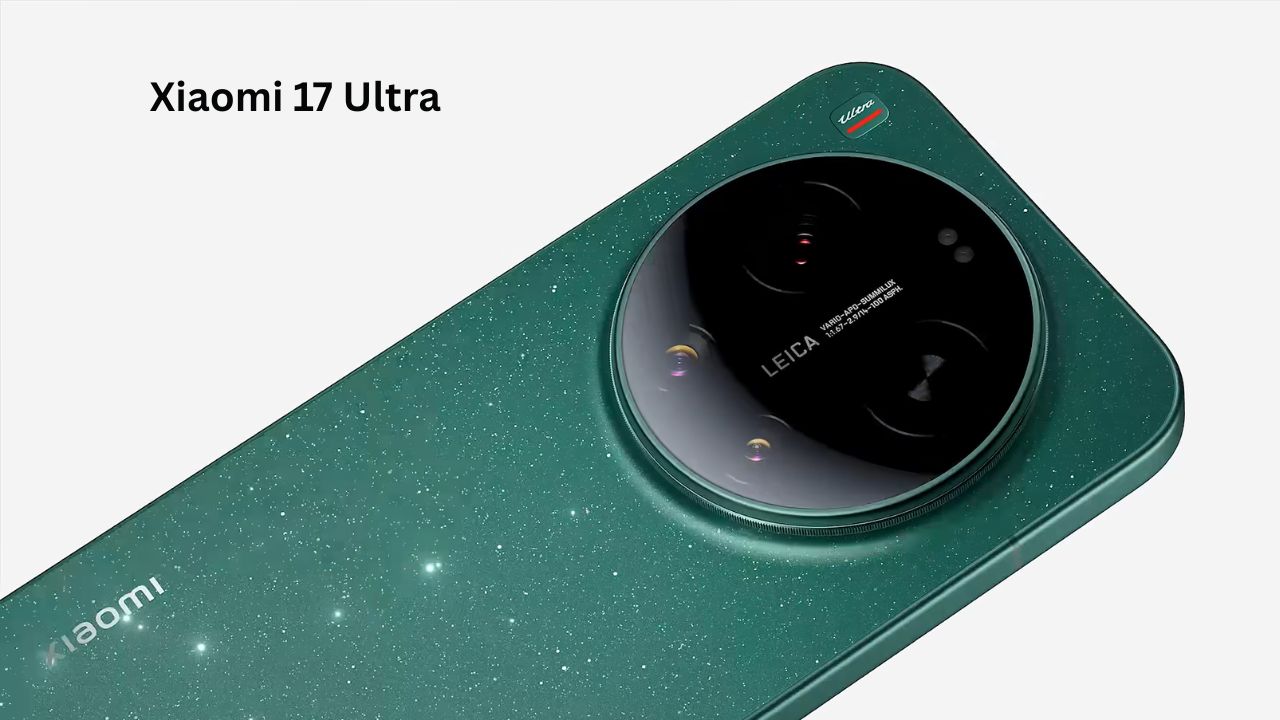
The Xiaomi 17 Ultra has finally arrived, and if you are a fan of mobile photography, this is likely the phone you have been waiting for. For years, Xiaomi’s “Ultra” series has been about pushing the limits of what a camera can do when stuck to the back of a smartphone. With the 17 Ultra, they haven’t just added more megapixels; they have changed how the lenses actually move and capture light.
The Big Picture: Design and Feel
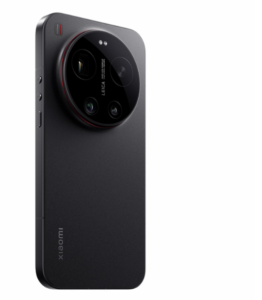
When you first pick up the Xiaomi 17 Ultra, the first thing you notice is the weight and the massive circular camera module. It is a heavy phone, weighing about 218 grams. It feels substantial, like a professional tool rather than just a gadget.
The back is covered in a premium fiberglass material that feels soft but grippy. It doesn’t attract fingerprints like glass does, which I really appreciate. The 6.9-inch screen is huge, but Xiaomi has trimmed the edges (bezels) so much that it doesn’t feel impossible to hold with one hand—though you will still want two hands for typing.
The display on the Xiaomi 17 Ultra is a massive 6.9-inch HyperRGB OLED panel that essentially functions as a professional-grade monitor in your pocket. It’s designed to be used anywhere—from a bright beach to a dark bedroom—without compromising on clarity or eye health.
Key Specifications
-
Resolution: 2K (Extra sharp for fine text and high-res photos).
-
Peak Brightness: 3,500 nits (Keeps the screen clear under direct sunlight).
-
Refresh Rate: 1Hz to 120Hz (Smooth scrolling that saves battery).
-
Color Depth: 12-bit (Supports over 68 billion colors for smooth gradients).
How These Features Actually Work for You
Visual Clarity: HyperRGB vs. Standard Screens
Most smartphones use a “compressed” pixel layout. The 17 Ultra uses a Full RGB architecture, which provides a 25% increase in perceived detail.
-
The Experience: When you zoom into a 200MP photo you just took, the edges stay sharp rather than becoming “fuzzy.” It feels less like looking at a screen and more like looking at high-quality printed paper.
Battery Intelligence: Adaptive LTPO 4.0
The screen is “smart” about how much energy it uses.
-
The Logic: When you are gaming or scrolling through a long article, it runs at 120Hz for total smoothness. However, if you are just looking at a static photo or reading an eBook, it drops to 1Hz.
-
Why it matters: This allows you to have a giant, bright screen without it draining your battery by lunch.
Pro-Grade Color Accuracy
Xiaomi has focused on Color Consistency across their 2026 lineup.
-
Real-Life Use: If you take a photo on your 17 Ultra and then open it on your Xiaomi Pad 8, the colors will look exactly the same. For photographers and editors, this is huge—you can trust that the “red” you see on your phone is the actual “red” in the file.
Eye Comfort: 3,840Hz PWM Dimming
If you’ve ever had a headache after using your phone in bed, it’s often because screens “flicker” at low brightness to dim the light.
-
The Solution: The 17 Ultra flickers at such a high frequency (3,840 times per second) that your brain cannot detect it. This significantly reduces eye strain and makes late-night reading much more comfortable.
Practicality: The “Wet Touch” Algorithm
Usually, water on a screen causes “ghost touches”—where the phone thinks you are tapping when you aren’t.
-
The Feature: Xiaomi uses a dedicated chip to ignore water and only respond to your finger.
The Camera: A Professional Studio in Your Pocket
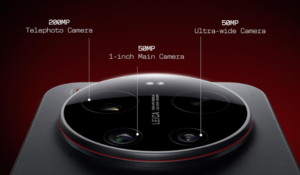
The camera is the main reason anyone buys this phone. Xiaomi is using a 1-inch main sensor. To put that in perspective, that is the same size sensor found in many dedicated compact cameras.
1. The Main 50MP Camera (23mm)
This sensor uses something called LOFIC technology.
-
How to use it: Use this for your “everything” shots. Because the sensor is so large, it naturally creates a “bokeh” effect (a blurry background) without needing a fake software “Portrait Mode.” If you take a photo of a coffee cup or a flower, the background will look soft and professional naturally.
-
Real-life use: Taking photos in a dimly lit restaurant. A 1-inch sensor gathers significantly more light than a standard phone sensor. You won’t need to use the flash, and the photos won’t look grainy.
2. The 200MP Telephoto (75mm – 100mm)
This is the standout feature. It is a “continuous optical zoom.”
-
The Spec: Most phones have fixed zoom steps (like 3x or 5x) and “guess” the space in between using digital cropping. The 17 Ultra actually moves the glass inside to stay optical between 75mm and 100mm.
-
How to use it: This is the perfect range for portraits. 75mm is widely considered the best focal length for the human face because it doesn’t distort your features.
-
My Opinion: If you are at a concert or a school play, the 200MP resolution means you can zoom in significantly, and even after you take the photo, you can crop it further without the image turning into a blurry mess of pixels.
Performance and Daily Power
Under the hood is the Snapdragon 8 Elite Gen 5. This is the fastest chip available for Android right now.
Why do you need this much power?
You might think, “I only use WhatsApp and YouTube, why do I need a super-chip?”
-
Longevity: A powerful chip means the phone won’t start lagging two years from now.
-
Photo Processing: When you take a 200MP photo, the phone has to do millions of calculations in a split second to make it look good. This chip handles that without the phone getting hot.
-
Gaming: If you play games like Genshin Impact or Call of Duty, you can run them at the highest settings with a steady 120 frames per second.
Battery and Charging
It has a 6,000mAh battery. Most flagships stop at 5,000mAh.
-
Wired Charging: 90W. It goes from 0% to 100% in about 35 minutes.
-
Wireless Charging: 50W. This is faster than most other phones charge with a cable.
A Quick Mention: The Xiaomi Pad 8
If you find yourself needing more screen space for work or editing those 200MP photos from the 17 Ultra, the Xiaomi Pad 8 is a great companion. It is an 11.2-inch tablet that is incredibly thin (only 5.75mm).
It uses a Snapdragon 8s Gen 4 chip, which is plenty for multitasking. One of the best features is Xiaomi HyperConnect. You can literally “flick” a photo from your 17 Ultra onto the Pad 8 screen to edit it on a larger canvas. It has a 144Hz refresh rate, making it a great device for watching movies or drawing with the Focus Pen Pro. If you are a creator, having both devices makes a lot of sense because they “talk” to each other perfectly.
Comparison: Xiaomi 17 Ultra vs. The Rivals
| Feature | Xiaomi 17 Ultra | Samsung S26 Ultra | iPhone 17 Pro Max |
| Main Sensor | 1-inch (Largest) | 200MP (Smaller pixels) | 48MP (Standard) |
| Zoom | 75-100mm Continuous | 3x & 5x Fixed | 5x Fixed |
| Battery | 6,000 mAh | 5,000 mAh | ~4,500 mAh |
| Charging | 90W Wired / 50W Wireless | 45W Wired | ~27W Wired |
| Screen Brightness | 3,500 nits | 2,500 nits | 3,000 nits |
My Take: The Samsung S26 Ultra is better if you absolutely need the S-Pen for note-taking. The iPhone 17 Pro Max is better if you are already deep into the Apple ecosystem (Apple Watch, Mac, etc.). But for pure hardware—screen, battery, and camera sensors—the Xiaomi 17 Ultra is technically ahead.
Detailed Pros and Cons of Xiaomi 17 Ultra
Pros
-
The Best Zoom in the Business: The 200MP telephoto isn’t just a gimmick. The level of detail you get at 5x or 10x zoom is noticeably better than the competition.
-
Incredible Battery Life: 6,000mAh is a beast. Even with heavy camera use, I found it easily lasts a full day and a half.
-
Display Quality: The “Wet Touch” technology is a life-saver. If you are using the phone in the rain or with sweaty hands, it still registers your touches perfectly.
-
Leica Colors: The partnership with Leica gives you two color modes: “Authentic” and “Vibrant.” Authentic looks like a real film photograph—not over-processed or “digital.”
Cons
-
The Weight: It is heavy. If you are used to a small, light phone, this will feel like a brick in your pocket.
-
Camera Bump: The module sticks out quite a bit. When the phone is lying on a table, it sits at an angle.
-
HyperOS Bloat: While the software is fast, it still comes with a few pre-installed apps that you probably won’t use. You can delete most of them, but it’s an extra step.
-
Selfie Processing: The front camera (50MP) is great, but it has a tendency to brighten skin a bit too much, making it look a little unnatural in very bright light.
Who Should Buy This?
You should buy this if:
-
You are a photographer or content creator who wants to leave their big camera at home.
-
You travel often and need a battery that won’t die by 4:00 PM.
-
You want the absolute best screen for watching movies and HDR content.
You should NOT buy this if:
-
You have small hands or prefer lightweight phones.
-
You only use your phone for basic calls, texts, and light browsing—the hardware here is “overkill” for simple tasks.
-
You prefer a very “clean” Android experience like on a Google Pixel.
1. Does the Xiaomi 17 Ultra support expandable storage?
No, the Xiaomi 17 Ultra does not have a microSD card slot. However, it comes with generous internal storage options, typically starting at 512GB and going up to 1TB. Since this phone is designed for 8K video and 200MP photos, we recommend choosing the 1TB model if you plan on shooting a lot of high-resolution content without offloading files to a cloud service or the Xiaomi Pad 8.
2. How does the “Continuous Optical Zoom” work on the Xiaomi 17 Ultra?
Most phones use “digital cropping” when you zoom between fixed lenses (like moving from 3x to 5x). The Xiaomi 17 Ultra is different. It features a mechanical system that physically moves the lens elements inside the phone. This allows you to stay in “optical” mode anywhere between 75mm and 100mm, ensuring that your portraits and mid-range shots never lose detail or look “pixelated.“
3. Is the Xiaomi 17 Ultra waterproof?
Yes, it features an IP69 rating. While most flagships are rated IP68, the Xiaomi 17 Ultra goes a step further by being resistant to high-pressure water jets and high temperatures. While you shouldn’t take it deep-sea diving, it is more than capable of handling heavy rain, accidental spills, or even a quick rinse under the tap.
4. Can I use the Xiaomi 17 Ultra for professional video editing?
Absolutely. With the Snapdragon 8 Elite Gen 5 and 16GB of RAM, the Xiaomi 17 Ultra can handle 4K 120fps Dolby Vision editing directly on the device. For a better experience, you can use Xiaomi HyperConnect to wirelessly “flick” your video files to a Xiaomi Pad 8, giving you a larger 11.2-inch canvas to fine-tune your edits with a stylus.
Final Thoughts
The Xiaomi 17 Ultra is a statement. It is Xiaomi saying they can build a better camera than anyone else. It isn’t a perfect phone for everyone because of its size and weight, but for a specific type of user—the “power user” or the “photographer”—it is hard to find anything better.
It feels like a real tool. Whether you are using the 200MP zoom to capture a bird in a tree or using the 90W charging to top up your battery while you have a quick coffee, the phone just works with high efficiency. If you can handle the size, it’s a brilliant piece of tech.
Xiaomi Pad 8 Review: Specs, Features, Best Battery & Display (2026)