
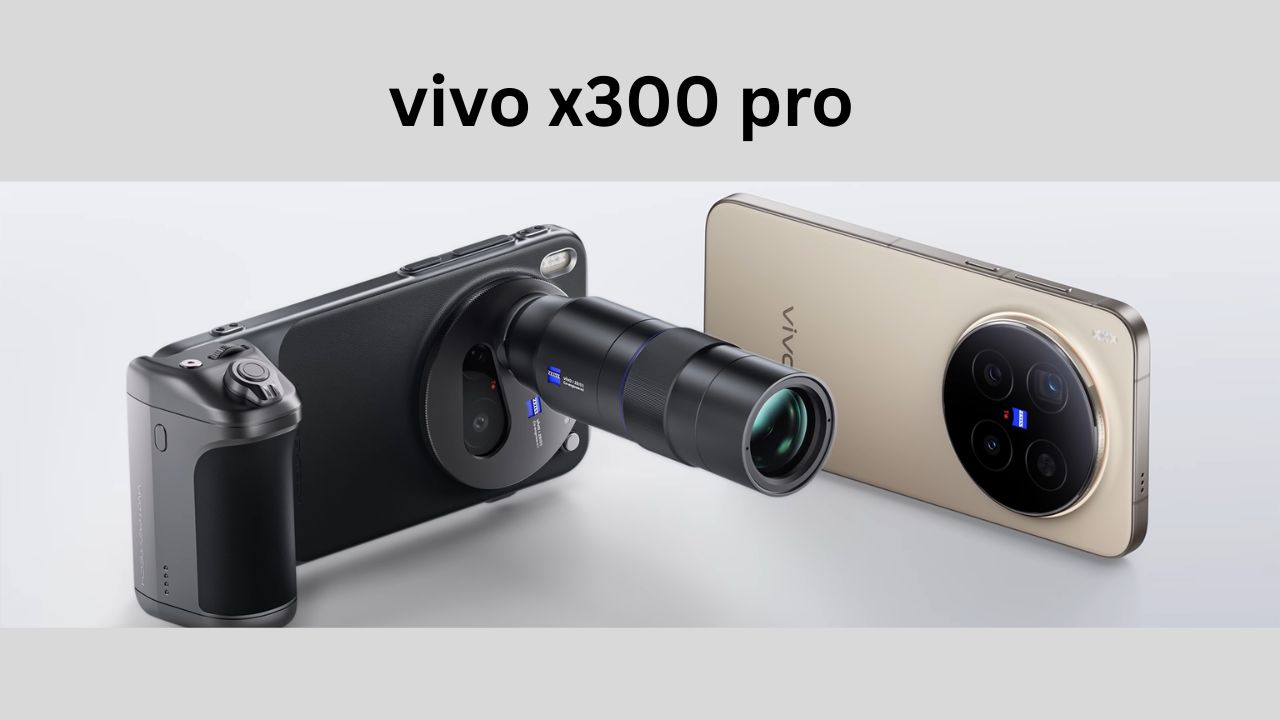
Vivo X300 Pro: The New King of Portraits and Battery?
If you have been following the smartphone market lately, you know that the “Pro” tag usually means a slightly better screen and a bit more zoom. But with the vivo X300 Pro, things feel a bit different this time. It isn’t just a small step up; it’s a massive jump in how we think about mobile photography and battery life.
Quick Specs Table
| Feature | Specification |
| Processor | MediaTek Dimensity 9500 (3nm) |
| Display | 6.78-inch LTPO AMOLED, 1.5K, 120Hz, 4500 nits |
| RAM/Storage | 16GB LPDDR5X / 512GB UFS 4.1 |
| Rear Camera | 50MP (Main) + 200MP (Periscope) + 50MP (Ultrawide) |
| Front Camera | 50MP with Autofocus |
| Battery | 6510 mAh BlueVolt |
| Charging | 90W Wired / 40W Wireless |
| Durability | IP68 & IP69 Water/Dust Resistance |
| Software | OriginOS 6 (Android 16) |
Design & Display: Brighter Than Your Future?
The first thing you’ll notice when you pick up the vivo X300 Pro is the “Unibody 3D Glass” design. It’s very smooth, and the way the glass curves into the frame makes it feel thinner than it actually is. It weighs 226g, so it has some heft, but it feels solid—like a piece of professional gear rather than a plastic toy.
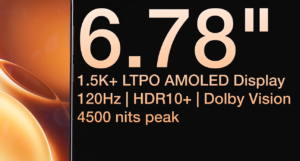
The screen is a 6.78-inch AMOLED panel that hits a staggering 4500 nits peak brightness. Now, in real life, you won’t see 4500 nits all the time, but it means that even under the harsh afternoon sun in India or Dubai, you won’t have to squint to read a text. Everything looks sharp because of the 1.5K resolution.
How to use this spec: The display uses “2160Hz PWM Dimming.” If you’re someone who uses your phone in the dark before sleeping, turn on the “Eye Protection” mode. This high-frequency dimming reduces screen flicker, which is the main reason your eyes feel tired at night.
Camera: The 200MP Magic
This is where the money is. The star of the show is the 200MP Zeiss APO Telephoto lens.
-
The Main Sensor (50MP Sony LYT-828): This is a 1/1.28-inch sensor. It’s physically large, which means it catches more light. In low light, it doesn’t just “brighten” the image artificially; it captures actual detail without much noise.
-
The Zoom (200MP): This is a periscope lens. It allows you to zoom in 3.7x optically, but because the sensor has so many pixels, even a 10x or 20x digital zoom looks surprisingly clean.
-
Portrait Mode: Vivo has always been the king of skin tones. The “Zeiss Natural Color” mode avoids making people look like they’ve put on too much makeup. It looks like a real person, with real skin texture.
How to use the camera specs: If you’re at a concert and you’re far from the stage, don’t just use the regular 1x mode and crop later. Switch to the 3.7x or 10x mode directly. The “APO” certification means the lens is specifically designed to stop “color fringing” (that weird purple glow you see around bright lights in cheap cameras). Use the “135mm Portrait” setting for those blurry-background shots—it makes a normal backyard look like a professional studio.
Battery: Finally, a Phone That Lasts
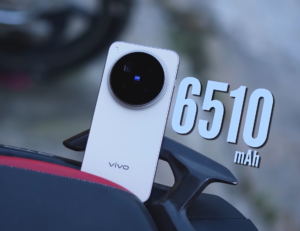
The 6510 mAh BlueVolt battery is probably the most practical feature of this phone. Most flagships stick to 5000 mAh to keep the phone light. Vivo decided that people value battery life more than a few grams of weight.
In a normal workday—emails, GPS navigation, plenty of photos, and some YouTube—I still had about 35% left by 11 PM. If you’re a light user, this is easily a two-day phone.
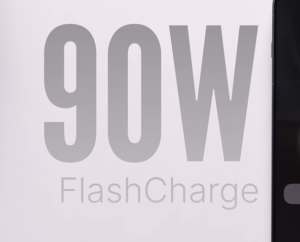
Charging: It comes with 90W fast charging. It’s not the absolute fastest in the world (some phones do 120W+), but it gets you from 0% to 50% in about 15-20 minutes. That’s more than enough for most people.
Performance: Smooth, Not Just Fast
Inside, we have the MediaTek Dimensity 9500. In the past, people were skeptical about MediaTek, but those days are gone. This chip is built on a 3nm process, which is currently the gold standard for efficiency.
In my use, apps stay open in the background for hours thanks to the 16GB of RAM. If you’re a gamer, you can play titles like Genshin Impact or PUBG at maximum settings without the phone turning into a heater. It gets warm, yes, but the internal vapor chamber does a good job of spreading that heat out so it doesn’t throttle your frame rates.
Imagine you’re editing a 4K video for Instagram while downloading a heavy game in the background. Most phones would stutter or close the editing app. The vivo x300 pro handles this comfortably because it uses “UFS 4.1” storage, which moves data much faster than the older storage types found in mid-range phones.
Comparison: Vivo X300 Pro vs Samsung S26 Ultra vs Xiaomi 17 Ultra
| Feature | vivo X300 Pro | Samsung S26 Ultra | Xiaomi 17 Ultra |
| Main Camera | 50MP (1/1.28″) | 200MP (1/1.3″) | 50MP (1.0″) |
| Zoom Lens | 200MP (3.7x) | 50MP (5x) + 10MP (3x) | 50MP (Dual Zoom) |
| Battery | 6510 mAh | 5000 mAh | 6000 mAh |
| Charging | 90W | 45W / 60W | 90W |
| Software | OriginOS 6 | One UI 8 | HyperOS 3 |
| Price (approx) | ₹1,09,999 | ₹1,39,999 | ₹1,15,000 |
The Breakdown:
-
Samsung wins on software updates (7 years) and the S-Pen. But it charges much slower and the battery is significantly smaller.
-
Xiaomi has a slightly better main sensor (1-inch), but the vivo x300 pro feels more balanced for portraits and has better battery endurance.
-
Vivo is the middle ground. It gives you the best zoom sensor and the biggest battery for a price that is lower than the Samsung.
Pros & Cons
The Good Stuff (Pros)
-
Incredible Battery: You genuinely stop worrying about chargers. It’s a liberating feeling.
-
The Zoom Camera: Taking clear photos of things far away is actually fun now, not just a gimmick.
-
Outdoor Visibility: The screen is incredibly bright; you’ll never have trouble seeing it outside.
-
Build Quality: IP69 rating means it can survive high-pressure water sprays, not just a dip in a pool.
-
Zeiss Colors: The color science is very mature. Photos look like they came from a camera, not a computer.
The Not-So-Good (Cons)
-
Weight: At 226g, it is heavy. If you have small hands or wear loose pockets, you will feel it.
-
Software: OriginOS is very fast and smooth, but it has a learning curve if you are coming from Samsung or a Pixel.
-
Speaker Quality: While they are stereo, they aren’t as “bassy” as the speakers on an iPhone or the S26 Ultra.
-
Single Storage Option: In many markets, you only get the 512GB version. While that’s a lot, some power users might want 1TB.
Who Should Buy This?
-
Travelers: If you’re often out all day taking photos and using maps, the 6510mAh battery is a life-saver.
-
Portrait Lovers: If 80% of your gallery is photos of people, this is the best phone you can buy.
-
Tech Enthusiasts: If you want the latest 3nm chip and a high-end display.
Who Should NOT Buy This?
-
Small Phone Fans: This is a big, heavy device. If you like using a phone with one hand comfortably, look elsewhere.
-
Stock Android Purists: The software is highly customized. If you like the “clean” look of a Google Pixel, you might find this too “busy.”
I’ve used a lot of phones, and usually, I find myself complaining about battery life by the evening. With the vivo x300 pro, that frustration is gone. Is it perfect? No. The camera module is huge, and the phone is heavy. But the trade-off is worth it. You get a camera that can genuinely replace a point-and-shoot and a battery that doesn’t quit.
I especially like the “Telephoto Macro” feature. You can take close-up shots of flowers or insects from a distance without casting a shadow on them. It’s these small technical wins that make the phone feel premium.
Final Verdict
The vivo X300 Pro is a specialized tool. It doesn’t try to be everything for everyone. It targets the “camera and battery” crowd and hits a home run. If you can handle the weight and the price tag of around ₹1,09,999, it’s one of the most capable hardware packages available in 2026. It’s a reliable, powerful, and incredibly capable flagship that feels like it was built for real-world use rather than just looking good in advertisements.
Realme P4 Power — The Perfect Phone for Battery Life, Performance, and All-Day Gaming

Good
Nice information