
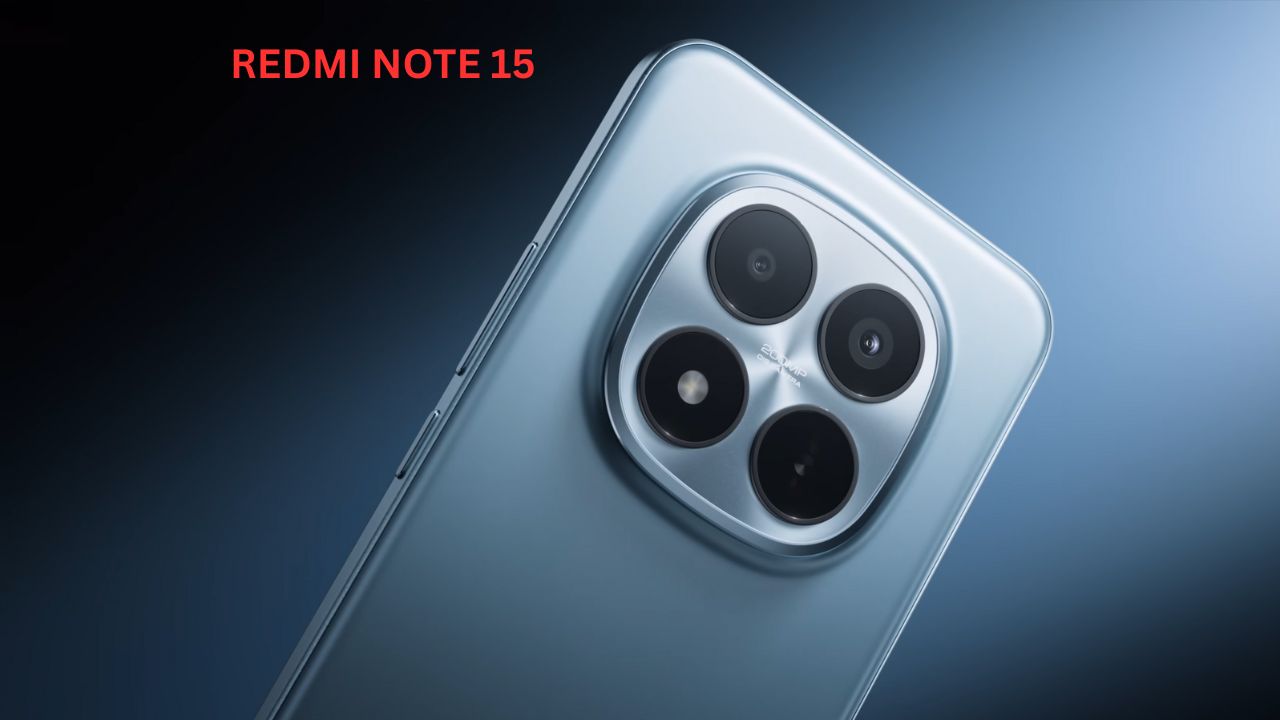
Redmi Note 15: The Practical Performance King?
The smartphone market moves fast, but the Redmi Note series usually finds a way to stay at the center of the conversation. With the launch of the Redmi Note 15, Xiaomi is trying to balance “toughness” with “everyday speed.” Most of us don’t need a phone that can fly to the moon; we need a phone that doesn’t lag when we’re switching between Instagram and a work email, and one that won’t die before we get home at night.
Quick Specs Table
| Feature | Specification |
| Display | 6.77-inch Curved AMOLED, 120Hz, 3200 nits peak |
| Processor | Qualcomm Snapdragon 6 Gen 3 (4nm) |
| Rear Camera | 108MP Main (OIS) + 8MP Ultra-wide |
| Front Camera | 20MP Selfie |
| Battery | 5,520mAh Silicon-Carbon |
| Charging | 45W Wired Turbo Charging |
| Durability | IP66 (Dust/Water) + MIL-STD-810H |
| Software | HyperOS 2.0 (Android 15) |
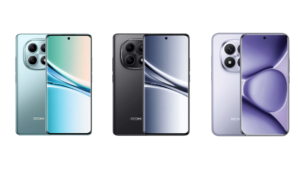
Design & Display: Built to Survive
One of the first things you’ll notice about the Redmi Note 15 is the “Titan Structure.” Now, usually, these names are just marketing, but here it actually translates to a MIL-STD-810H certification. In plain English: it’s tougher against drops and bends than your average mid-range phone. It’s surprisingly slim at 7.35mm, making it easy to hold, but it feels dense and solid.
The screen is a 6.77-inch curved AMOLED. Curved screens are a love-it or hate-it feature. They look premium and make swiping back feel smoother, but they can be prone to accidental touches. Xiaomi added something called HydroTouch 2.0, which is a life-saver if you’ve ever tried to use your phone with wet hands or in light rain—the screen actually responds instead of going crazy. With a 3200-nit peak brightness, you won’t be squinting to read texts even under the harsh afternoon sun.

Performance: Smooth for the Long Haul
Inside, it uses the Snapdragon 6 Gen 3. While this isn’t a flagship gaming chip, it is built on a 4nm process, which means it’s very efficient. In real-life use, apps open quickly, and scrolling through heavy websites feels fluid.
Xiaomi is claiming “48 months of lag-free performance.” While I’d take any four-year claim with a grain of salt, the jump to HyperOS 2.0 has definitely made the interface feel lighter. It doesn’t get as warm as previous generations during a 30-minute gaming session, which tells me the thermal management is doing its job. It handles games like BGMI or Genshin Impact on medium settings quite well, but if you’re a pro-level gamer, you might want more raw power.
Camera: 108MP with a Real Safety Net
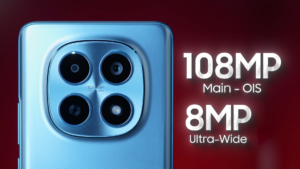
The 108MP main camera is the star here. The big addition is OIS (Optical Image Stabilization). This isn’t just a fancy acronym; it physically moves the lens to compensate for your shaky hands.
-
Daylight: Photos are sharp with natural colors. It doesn’t over-saturate the greens and blues as much as older Redmi phones did.
-
Low Light: This is where the OIS helps the most. The shutter stays open a bit longer without blurring the image, pulling in more light. It’s not going to beat a flagship, but for a mid-ranger, the night mode is very respectable.
-
Video: It supports 4K recording, and the stabilization makes handheld walking shots look much more professional and less “shaky-cam.”
The 8MP ultra-wide is decent for group shots or landscapes, but the quality drops a bit compared to the main sensor. The 20MP front camera is great for video calls and clear selfies without that “plastic” skin smoothing effect turned on by default.
Battery:
The Redmi Note 15 uses a 5,520mAh Silicon-Carbon battery. This tech allows them to pack more capacity into a thinner body. In my experience, if you start your day at 8 AM, you’ll easily reach the next afternoon before needing a plug.
The 45W charging isn’t the fastest in the world (some competitors offer 80W or 100W), but it’s a safe middle ground. It takes about 45-50 minutes for a full charge. A nice touch is the 18W reverse wired charging—you can actually use your phone like a power bank to top up your friend’s dying iPhone or your wireless earbuds in an emergency.
Detailed Comparison: Redmi Note 15 vs The Rivals
| Feature | Redmi Note 15 | Samsung Galaxy A56 | Poco X7 Pro |
| Build | Titan Structure / IP66 | Plastic / IP67 | Plastic / IP54 |
| Processor | Snapdragon 6 Gen 3 | Exynos 1580 | Snapdragon 7+ Gen 3 |
| Charging | 45W | 45W | 90W |
| Camera | 108MP OIS | 50MP OIS | 64MP OIS |
Vs. Samsung Galaxy A56: The Samsung feels more “polished” in software and will likely get longer updates, but it feels slower in daily tasks compared to the Redmi. The Redmi’s screen is also significantly brighter.
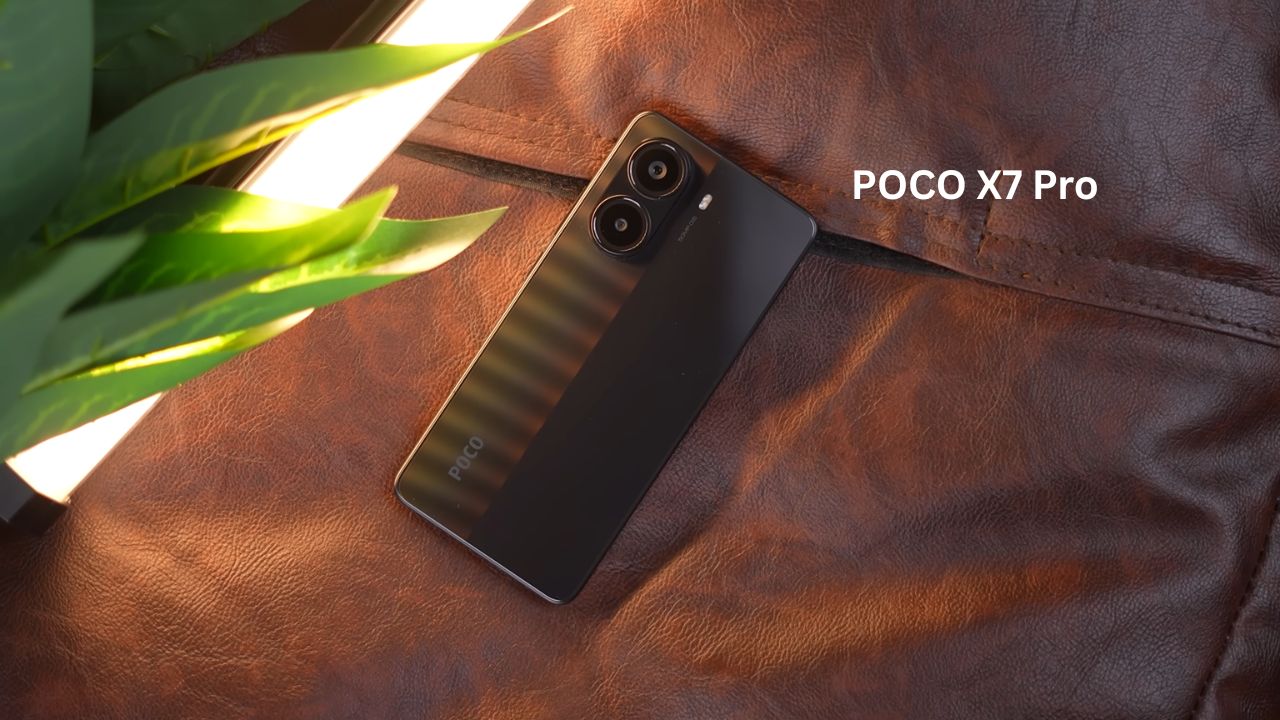
Vs. Poco X7 Pro: If you only care about gaming, the Poco is the winner because of its more powerful chip. However, the Redmi Note 15 is much more durable and has a better camera for general photography.
Who Should Buy This?
-
The Practical User: If you want a phone that lasts two days and won’t break if it falls off the coffee table.
-
Outdoor Workers/Travelers: The high brightness and wet-touch screen are genuinely useful if you spend a lot of time outside.
-
Social Media Creators: The 108MP camera with OIS is one of the most stable for video in this price bracket.
Who Should Not Buy This?
-
Hardcore Gamers: If you spend 4 hours a day on high-end competitive games, you’ll want something with a Snapdragon 7 or 8 series chip.
-
Small Phone Lovers: This is a big 6.77-inch device. It’s thin, but it’s still tall.
Pros & Cons
The Good Stuff
-
Durability: The IP66 rating and Titan Structure mean you don’t have to baby this phone. It can handle the “oops” moments of life.
-
Display Quality: The 3200-nit brightness and wet-touch tech make it very practical for outdoor use.
-
Reliable Battery: You aren’t constantly looking for a charger by 6 PM.
-
OIS Camera: Makes a massive difference in video and night-time photography.
The Not-So-Good Stuff
-
No Charger in Box: Xiaomi has started following the trend of not including the brick in some regions. You’ll need a 45W PD charger to get the best speeds.
-
UFS 2.2 Storage: While the chip is new, the storage tech (UFS 2.2) is a bit older. It’s fine for daily use, but UFS 3.1 would have made file transfers much faster.
-
Bloatware: HyperOS is better, but you’ll still spend 10 minutes uninstalling “pre-installed” apps you never asked for.
I think Xiaomi realized that people are keeping their phones longer. Instead of giving us a 200MP camera that takes “okay” photos, they gave us a 108MP camera with proper stabilization and a body that can actually survive for three or four years.
The Redmi Note 15 isn’t a “flashy” phone, and that’s actually why I like it. It focuses on the basics: the screen is great, the battery is huge, and it’s tough. Yes, I wish it had faster storage and fewer pre-installed apps, but for the price, it feels like a very honest tool.
Final Verdict
The Redmi Note 15 is the “safe” choice that doesn’t feel boring. It brings flagship-level durability and display tech down to a price that most people can actually afford. If you need a reliable daily driver that won’t let you down when things get a little rough, this is easily one of the best options in 2026.
vivo x200T is coming with new flagship Phone with Three 50 MP Cameras and best Battery Back up

1 thought on “Redmi Note 15 : A Powerful All-Round Smartphone with Stunning Display and Strong Performance”